
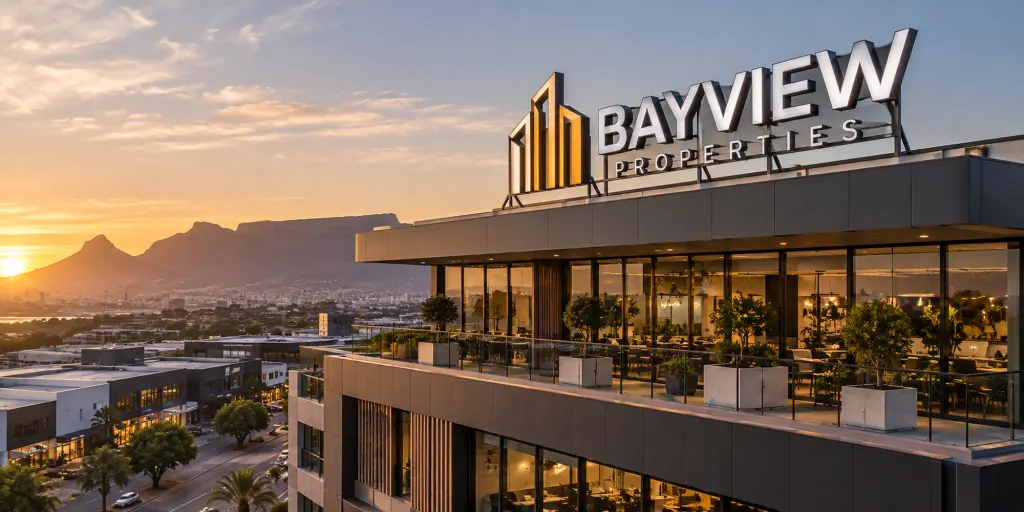
Rooftop billboards often use mesh print to reduce wind load at height. Boldmedia Print Zimbabwe prints mesh and PVC billboard skins and works with installers on access and fixing, with engineering input where required. A site survey may be needed before a formal quotation for rooftop billboards.
Rooftop billboards are billboard faces mounted on a structure on top of a building, using the building’s height to put the message above street-level clutter. They are common in dense urban areas and along elevated highways, where they can be seen over long distances. Businesses also use rooftop billboards on their own buildings to advertise themselves or rent the space to other advertisers.
Compared with roadside billboards, rooftop units rely on the building to carry the load, so the roof structure, waterproofing and wind exposure must all be assessed. This makes engineering input and a site survey essential. A good rooftop billboard is anchored without compromising the roof, provides safe access for skin changes and is oriented to the main traffic flow.
Where it works well
- City-centre advertising sites
- Highway-facing building rooftops
- Own-building brand billboards
- Retail and hotel rooftops in busy precincts
- Rental advertising income for building owners
- Large-scale campaign launches
Materials and finishes
- Steel frame anchored to roof structure
- Printed PVC or mesh skins
- Tensioning frames and fixings
- Walkways, ladders and fall-arrest points
- Waterproof base plates and flashing
Lighting options
- LED floodlights
- Non-illuminated
- Timer-controlled lighting via the building supply
What affects the price
- Face size and number of faces
- Roof structure and load capacity
- Steel frame and anchoring design
- Crane hire and road closures
- Access and safety equipment
- Approvals and engineering
- Lighting and power connection
Supplying measurements
Tell us the building location, roof type and height, and which direction the billboard should face. Photos of the roof and the view toward the target road are very helpful.
Artwork requirements
Provide print-ready CMYK artwork to the face proportions, using vector logos and high-resolution images suitable for long viewing distances. Bold type and strong contrast read best from below.
Survey and installation
Rooftop billboards require a site survey before a formal quotation, structural engineering input on the roof's capacity and wind loads, and the necessary municipal and building owner approvals. Installation usually involves cranes and work-at-height safety controls.
Maintenance
Inspect anchors, roof penetrations and skin tension regularly to prevent leaks and wind damage. Keep access equipment and safety points in good condition for future skin changes.
Frequently asked questions
Can any roof take a billboard?
Not necessarily. An engineer needs to assess whether the roof structure can carry the load and wind forces.
Will a rooftop billboard cause roof leaks?
Penetrations must be properly flashed and sealed; this is planned into the installation.
Can I rent my rooftop billboard to advertisers?
Many owners do. Approvals for third-party advertising may differ from own-brand signage, so check with the municipality.