
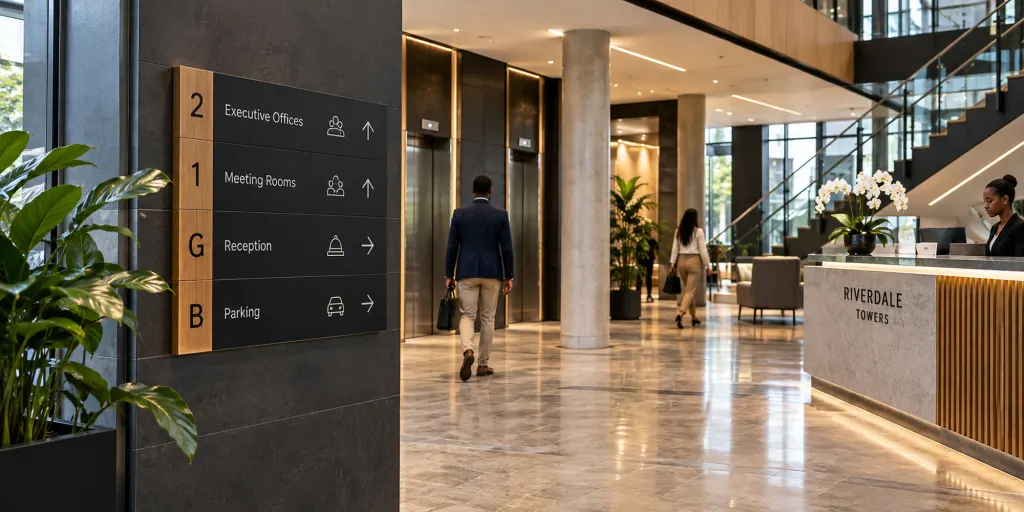
Pedestrian direction signs use printed icons and short text to guide people on foot. We print wayfinding panels with consistent symbols and colours across your site. Boldmedia Print Zimbabwe keeps the master layout for additions later.
Pedestrian direction signs guide people on foot through campuses, hospitals, shopping centres, office parks and public facilities. They sit at eye level or overhead, list several destinations with arrows, and often use pictograms for toilets, lifts, stairs and exits. Formats include wall-mounted panels, fingerpost signs, freestanding totems and suspended corridor signs.
Good pedestrian signage is consistent from the first sign to the last, uses clear type with good colour contrast, and groups destinations logically so people are not overwhelmed. Unlike vehicle direction signs, which must be read quickly at speed with very few words, pedestrian signs can carry more information and be read at closer range, but they need to be placed where foot traffic naturally pauses.
Where it works well
- Hospital and clinic corridors
- University, college and school campuses
- Shopping centre malls and parking exits
- Office park walkways between buildings
- Airports, stations and public facilities
- Estates, parks and outdoor venues
Materials and finishes
- Aluminium composite or aluminium tray panels
- Acrylic with vinyl or printed graphics
- Freestanding totems in powder-coated steel or aluminium
- Fingerpost signs on round posts
- Suspended double-sided ceiling signs
- Tactile and Braille elements where required
Lighting options
- Non-illuminated in well-lit areas
- Internally lit totems for outdoor routes used at night
What affects the price
- Number of signs and destinations listed
- Wall, suspended, fingerpost or totem formats
- Materials and finishes
- Tactile or Braille elements
- Wayfinding planning and design time
- Illuminated totems and electrical work
- Site size and installation access
Supplying measurements
Send a site plan or sketch showing the main routes and destinations, plus photos at each junction. Note ceiling heights where suspended signs are considered and whether signs are indoors or outdoors.
Artwork requirements
Provide a list of destinations, any existing brand guidelines and your logo as vector artwork. If there is no existing wayfinding style, we can propose a consistent layout, colour coding and pictogram set for approval.
Survey and installation
A site survey is recommended for larger sites so sign positions follow real walking routes. Freestanding totems need base plates or footings, suspended signs need secure ceiling fixings, and work in busy areas can be scheduled to limit disruption.
Maintenance
Clean panels with a damp cloth and mild detergent and check fixings on suspended signs. Keep a record of the sign schedule so individual panels can be updated as departments move.
Frequently asked questions
Can you plan the whole wayfinding route?
Yes, we can review a site plan or survey the site and propose where signs should go and what each should say.
Do you use pictograms?
Pictograms for common facilities help visitors who read different languages or are moving quickly, and can be included in the design.
Can tactile or Braille signs be added?
Tactile and Braille elements can be included where required for accessibility.